How to Store Seeds at Home: Containers, Freshness and Labels
Quick answer: Follow the storage instructions on the seed pack. Keep dry edible seeds in a securely closed food container, protected from moisture, heat and direct sunlight. Retain the original best-before and batch information, and use a clean, dry spoon.
Good storage begins before you open a packet. Think about how often you use seeds and how much space you have in a suitable cupboard or refrigerator. A larger purchase only works well if you can keep it properly and use it within the manufacturer's guidance.
1. Read the packet before choosing a shelf
Different products can have different requirements. Plain seeds, roasted mixes and fruit-containing mixes should not automatically be assigned the same storage period. Check for instructions that apply after opening, including any recommendation to refrigerate.
Do not invent a new expiry date when you transfer food into a jar. Keep the original label or record the product name, batch information, best-before date and opening date.
2. Choose a clean, dry container
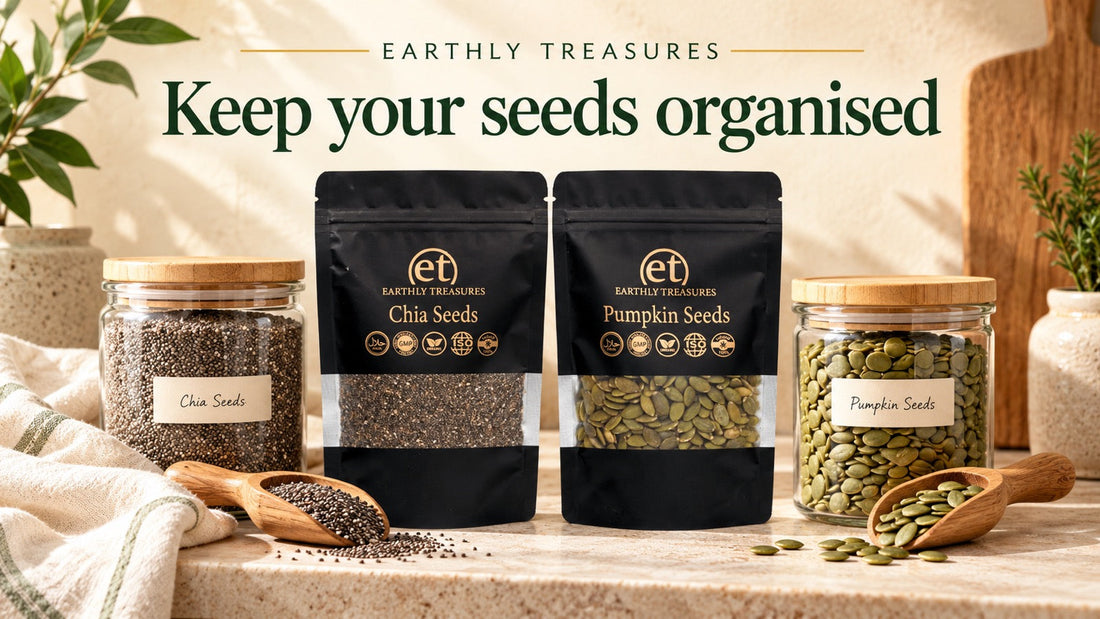
Use a food-safe container with a tight-fitting lid. Wash a reused container and allow it to dry completely before filling it. A clean glass jar can make the contents easy to identify, but it still needs protection from direct light and a secure seal.
University of Maryland Extension recommends tight-fitting storage containers and cool, dry conditions to help protect pantry food from pests. Inspect new purchases and keep shelves free from spills.
3. Keep moisture out during daily use
Use a dry spoon rather than the spoon you have just used for yogurt. Close the packet or jar after taking your portion. Avoid opening the main container beside steam from a boiling pot.
If you toast seeds at home, let them cool completely before sealing. For that preparation step, see our pumpkin seed pan-toasting guide.
4. Rotate packs instead of mixing old and new
Use the earlier suitable pack first. Avoid continually topping up a jar with new seeds, which makes dates and batch details harder to track. Finish and clean the container before refilling it.
For a household using seeds only occasionally, a smaller pack may be easier to manage than a multipack. Compare total grams and your actual routine when shopping, rather than looking only at the discount.
5. Separate dry storage from prepared-food storage
A dry seed's storage instructions do not apply once it has been mixed with milk, yogurt or cooked food. Refrigerate those prepared dishes promptly and follow guidance for all their ingredients. For instance, chia pudding belongs in the refrigerator even if the unopened dry chia packet was kept in a cupboard.
What if the seeds look or smell wrong?
Do not eat seeds showing mould, pest infestation or an unusual rancid smell. Do not try to rescue a suspect batch by toasting it. A normal appearance or smell also cannot prove food is safe, so follow storage instructions and any relevant recall information.
Frequently asked questions
Should every seed go in the refrigerator?
Follow the product's instructions. If they are unclear, ask the seller for guidance appropriate to that pack and your storage conditions.
Can I keep a small amount at my desk?
Use a clean, dry, securely closed container and follow the product's temperature and storage guidance. Retain the label details.
How long do opened seeds last?
There is no single reliable period for every seed and mix. Use the manufacturer's after-opening advice and best-before information.
Explore the seed pantry and roasted seed mixes, choosing quantities that fit how often you use them.