Raw vs Roasted Seeds: Choosing for Snacks, Toppings and Cooking
Quick answer: Choose plain seeds when you want control over preparation and seasoning. Choose ready-roasted seeds when you want a toasted flavour and a convenient snack or topping. Read the label: roasted products can differ in added oil, salt, seasoning and other ingredients.
The useful comparison is the product you will actually eat. Two packets labelled “seeds” can have different seed combinations and flavourings. Start with your intended use, then compare ingredient lists and equal quantities.
What is the practical difference?
| Question | Plain or unroasted seeds | Ready-roasted seeds |
|---|---|---|
| How will I use them? | As a recipe ingredient, topping or base for home toasting, following the pack instructions | As a prepared snack or finishing topping, where labelled ready to eat |
| Who controls the seasoning? | You add the flavour you want | The recipe may already include seasoning; check the label |
| What texture should I expect? | Depends on the individual seed and preparation | Usually a more toasted flavour and crunch, depending on the product |
| Is oil always added? | Check the ingredients | No; dry-roasted and oil-roasted products differ |
When plain seeds make sense
A single-seed pack is useful if you want to choose the mix yourself. You might add sunflower seeds to yogurt, use pumpkin seeds as a salad topping, or toast a small batch with your preferred spices.
Plain does not mean every seed can be treated identically. Quinoa is usually cooked as a meal base; chia is commonly hydrated for pudding. Follow each food's preparation instructions rather than applying a snack-seed method to the entire pantry.
When roasted seeds make sense
A ready-roasted mix can save a preparation step when you want an immediate topping. It also gives a consistent blend without buying each ingredient separately. Check whether the pack is a plain seed mix, a seasoned snack, or a seed-and-fruit combination.
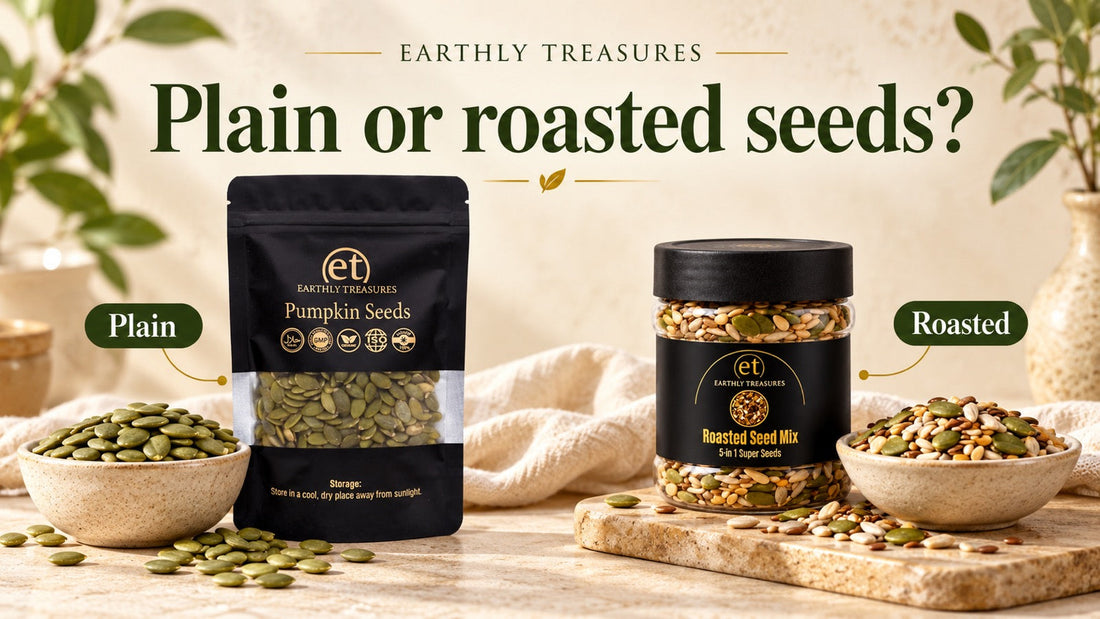
The current Earthly Treasures 5-in-1 mix lists pumpkin, sunflower, watermelon, flax and sesame seeds. It is described as dry-roasted without added oil. That statement applies to this product; it should not be assumed for every roasted snack.
Compare ingredients before making nutrition claims
“Raw” and “roasted” alone do not tell you which packet has more salt, sugar, protein or calories. For a useful comparison, read the nutrition information on both packs using the same weight. Do not compare a full jar with a small spoonful.
Check allergens too. The five-seed mix contains sesame. A single-seed ingredient list also does not establish that a product is free from cross-contact with other foods.
What about home roasting?
Home toasting lets you make a small batch to your taste. Start with edible seeds and follow the packet's guidance. For pumpkin seed kernels, our pan-toasting guide explains how to control the heat and avoid scorching. Light home toasting is not a validated food-safety treatment.
Frequently asked questions
Does roasted mean oil-free?
No. Look for the product's specific ingredient and processing information.
Which works better on oats?
Either can work where suitable for eating as prepared. Choose the flavour you prefer and add at serving time for more texture.
Are fruit mixes the same as classic seed mixes?
No. Read our classic, cranberry and raisin comparison for the differences.
Compare the single-seed range with the roasted mixes to find the format that fits your kitchen.