Rolled vs Steel-Cut vs Instant Oats: Texture, Cooking and Uses
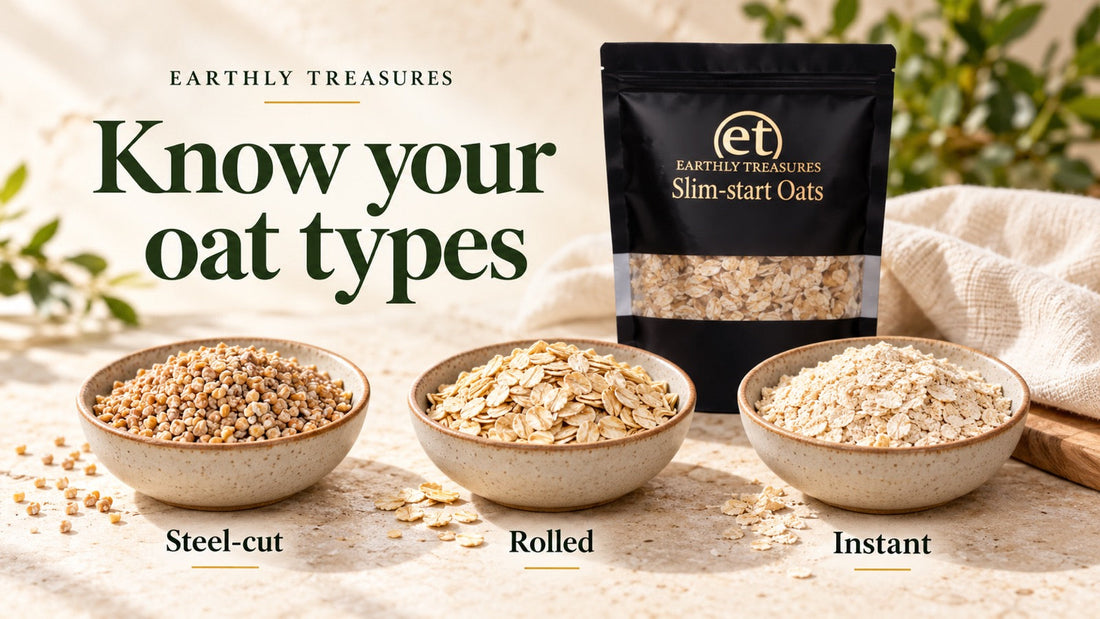
Quick answer: Steel-cut oats are chopped oat groats with a chewy texture and longer cooking time. Rolled oats are steamed and flattened into flakes. Instant oats are processed into thinner pieces that soften more quickly. Choose according to the meal and texture you want.
The oat format affects what happens in the saucepan or breakfast jar. A recipe that works for rolled oats may turn out very differently with steel-cut or instant oats. Check the exact packet rather than relying only on the word “oats”.
Compare the three formats
| Format | Physical form | Typical result | Useful starting point |
|---|---|---|---|
| Steel-cut | Groats cut into pieces | More chew and distinct grains | A cooked porridge recipe designed for steel-cut oats |
| Rolled | Steamed, flattened flakes | Soft flakes with some texture | Porridge, suitable overnight recipes and granola recipes |
| Instant | Thinner, more processed pieces | A quicker, softer bowl | Fast preparation according to the packet |
Cooking times: use the label as your guide
Steel-cut oats generally take longer than rolled oats, while instant oats soften fastest. The exact time and liquid ratio depend on the product and equipment. Use the packet's method instead of transferring a cooking time from a different oat format.
A prepared blend needs particular attention. Fruit, nuts, seeds and psyllium can change thickness and texture. For example, the current warm directions for Earthly Treasures FemiFuel, Slim-start and GlucoBalance use a measured portion of dry blend with water or milk, simmered for 5–7 minutes while stirring. Follow your current pack directions for the portion and liquid amount.
Which oats work for overnight preparation?
Plain rolled oats suitable for soaking are a practical starting point. Instant oats usually give a softer result; steel-cut pieces need a method designed for their firmer structure. Follow any cooking requirement on your packet.
For a measured base, topping ideas and troubleshooting, use the overnight oats recipe guide. Keeping a consistent oat format helps you adjust one variable at a time.
Plain oats and prepared blends are different choices
“Rolled” describes processing, whereas “blend” describes a product containing several ingredients. A blend can use rolled oats as its base and still contain fruit, nuts, seeds or spices.
Earthly Treasures FemiFuel, Slim-start, GlucoBalance and Bulk Up list rolled oats among their ingredients. They are not single-ingredient plain oats. Use the blend buying guide if you want to compare those products, or the pack-value guide to compare cost by equal weights.
What to check beyond texture
Read the full ingredients on flavoured or instant products, since the format alone does not tell you whether sugar or seasoning has been added. Compare nutrition labels using the same weight, and review allergens and cross-contact information.
Do not infer gluten-free suitability from the oat type. A multi-ingredient blend may contain other grains, and cross-contact information matters for anyone who must avoid gluten.
Frequently asked questions
Is oatmeal a fourth type?
In everyday use, oatmeal often means cooked oat porridge. It does not reliably identify whether the starting oats were steel-cut, rolled or instant.
Can I substitute one type in baking?
Follow the recipe. A change in flake size and absorption can alter the result, especially where the recipe depends on a specific oat texture.
Is one type always the best?
No. Choose the format that suits your preparation time and preferred result, then assess the whole product.
For general nutrition rather than preparation differences, read the oats benefits guide. The Nutrition Source also describes how oat formats are processed.