How to Make Tahini at Home with Sesame Seeds
Quick answer: Tahini is a sesame paste. Grind suitable sesame seeds in a food processor, then keep processing until the seeds release their oils and form a paste. A little neutral oil can help the blades move, but the equipment and seed format influence the final texture.
Homemade tahini is useful when you want a sesame base for a dip, hummus or a lemon dressing. It is different from hummus itself: this recipe does not contain chickpeas. Start with a small batch and a machine that can process that amount effectively.
Ingredients and equipment
- 100g food-grade sesame seeds; pale hulled seeds generally give a lighter, smoother paste
- 1–2 tablespoons neutral oil, added only as needed
- A small pinch of salt, optional
- A small food processor or grinder suitable for oily pastes, plus a spatula
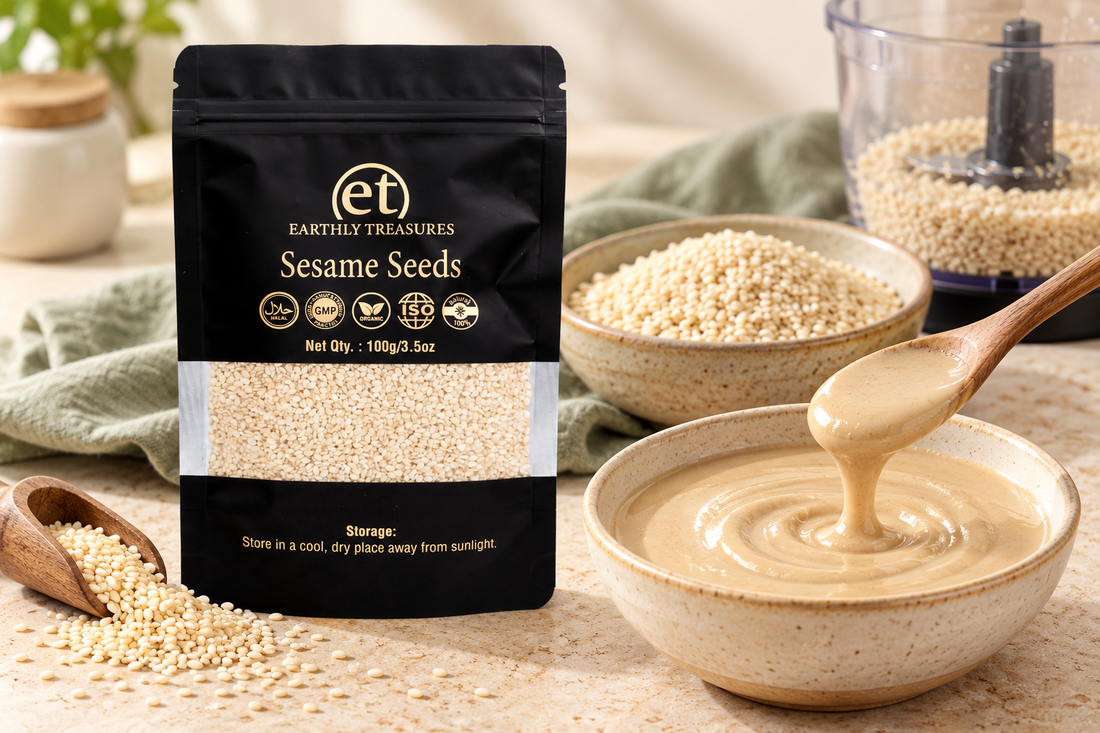
Check whether your seeds are hulled and suitable for the recipe. The current Earthly Treasures sesame listing states 100% sesame seeds but does not specify hulling. Confirm the pack or ask before expecting a pale, very smooth result. If your processor’s minimum batch is larger than 100g, scale the ingredients to its instructions rather than running the blades over an amount they cannot reach.
Step-by-step tahini method
- For a toasted flavour, put the sesame in a dry pan over low to medium-low heat. Stir frequently until fragrant and only lightly golden. Transfer to a plate and let cool. Skip dark browning, which can give an unpleasant bitterness.
- Put the cooled seeds in the processor. Process in short bursts, stopping and unplugging as required by the appliance instructions before scraping the sides.
- Continue until the mixture moves from loose crumbs towards a thicker paste. Give the motor breaks if needed; never exceed its recommended run time.
- If the blades struggle after the seeds have broken down, add one tablespoon of neutral oil and process again. Add the second tablespoon in small increments only if needed.
- Taste and add the optional salt. Stop when the texture suits your use. A home machine may leave a slightly grainier paste than a commercial tahini.
How to use the finished paste
For an immediate-use dressing, whisk one tablespoon of tahini with one teaspoon of lemon juice, then add drinking water a teaspoon at a time until pourable. The mixture may tighten before it loosens. Taste before adding salt. Make only the amount you need for the meal, and refrigerate any perishable prepared dressing promptly.
Serve the dressing with vegetables or a lunch bowl. For a grain-style base, our quinoa cooking guide explains the water ratio. You can also use tahini in a hummus recipe that specifies its other ingredients and quantities.
Why is my tahini thick, grainy or bitter?
- Thick: scrape the sides and check whether the blades can reach the batch. Add oil gradually rather than pouring in several tablespoons at once.
- Grainy: seed hulls and appliance power affect smoothness. More processing may help, within the machine’s operating limits.
- Bitter: heavily toasted seeds can taste burnt. A naturally assertive sesame flavour is different from scorching. Use fresh ingredients and a lighter toast for the next batch.
Allergens and storage
Tahini contains sesame. Keep that information clear when serving a dip or dressing, even when no whole seeds are visible. Store finished paste in a clean, closed container in the refrigerator and use clean utensils. This recipe has no validated shelf-life study, so do not assume a commercial jar’s best-before period applies to a homemade batch. Make a small quantity and seek appropriate storage guidance if keeping it beyond immediate use.
Frequently asked questions
Does tahini need chickpeas?
No. Chickpeas are used in hummus. Tahini is the sesame paste that can be added to hummus.
Can I leave out the oil?
Try processing the sesame alone if your equipment can handle it. Added oil is a texture aid, not a requirement to add the full amount.
Can a roasted seed mix make tahini?
It would produce a different multi-ingredient paste. Use sesame for this recipe.
Explore Sesame Seeds and compare plain versus prepared products in our seed-format guide.