How to Use Watermelon Seeds (Maghaz Tarbooz) in Meals
Quick answer: Use food-grade watermelon seed kernels as a mild, nutty topping or a small snack. Check whether your packet contains shelled kernels or whole seeds with hard shells before choosing a method. They are different preparation formats.
Watermelon seeds are also known as maghaz tarbooz in the kitchen. If you have seen them in a seed mix but never bought a separate pack, begin with one simple use: a light topping over a meal you already make. There is no need to combine every seed in your pantry at once.
Check the seed format first
This guide’s meal ideas refer to edible shelled kernels. Do not assume seeds collected from a slice of watermelon are the same prepared product. Shell-on seeds require their own handling, and gardening seed is not a food ingredient.
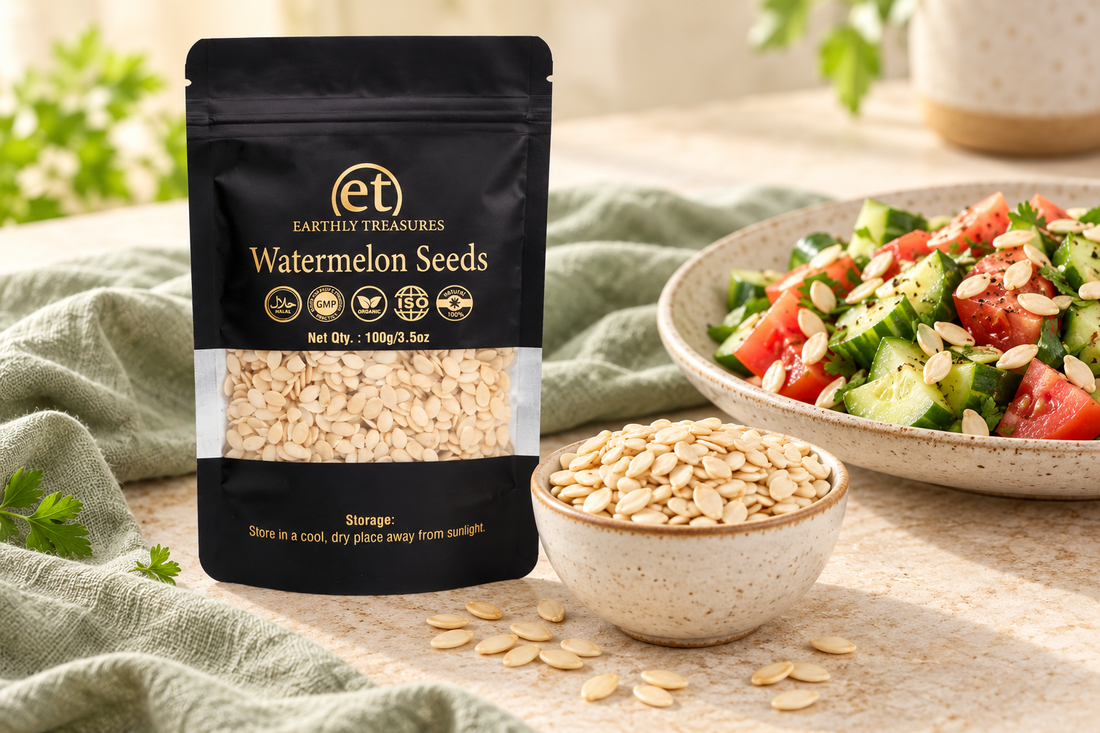
The current Earthly Treasures Watermelon Seeds listing describes 100% watermelon seeds in 100g individual packs and suggests light dry-pan roasting. Confirm the actual kernel or shell format on your pack before applying the topping ideas below.
How to lightly toast edible kernels
- Check the packet’s preparation directions and use a clean, dry pan. Add only enough edible kernels to form a thin layer.
- Warm over low to medium-low heat, stirring frequently. Watch for a lightly toasted aroma and slight colour change rather than waiting for dark browning.
- Tip onto a heatproof plate promptly so the residual pan heat does not keep cooking the seeds.
- Let cool before using as a dry topping. Keep any remaining kernels according to the packet’s storage guidance.
Start with a small batch because pan size and heat vary. If kernels smell scorched or turn very dark, do not mix them into the rest of the food. The method is intended for flavour and texture; it is not a validated sterilisation process.
Five ways to add them to meals
- Yogurt and fruit: scatter a small measured amount over a bowl just before eating, so the topping retains some crunch.
- Salad: add to cucumber, tomato and cooked chickpea salad. A little lemon and herbs can keep the rest of the dressing simple.
- Oats: use as an optional finishing ingredient after cooking. Check whether a prepared oat blend already includes seeds before adding more.
- Soup or cooked vegetables: sprinkle at the table rather than simmering the kernels for a long time if you want their texture to remain noticeable.
- A snack mixture: combine small quantities of suitable ready-to-eat ingredients. Label a shared mixture with all included ingredients, especially if you add sesame or nuts.
For a cooked base to your lunch bowl, follow our quinoa method. For a breakfast base, use the overnight oats guide. These recipes keep the main preparation separate from the optional seed topping.
Buying a separate pack or a mix
A single-ingredient pack lets you choose the quantity and preparation. A ready-roasted mix is useful when you want several seeds already combined. It may include other ingredients, so compare labels rather than assuming it has the same composition as plain watermelon seeds. The mix seeds buying guide explains the formats.
Choose pack sizes around how often you will use them, retain the best-before details and use dry utensils. Follow the seed storage guide for organising opened packs; it does not replace the manufacturer’s directions.
Frequently asked questions
Are these the black seeds inside fresh watermelon?
A food packet can contain processed edible kernels, while fresh fruit contains seeds with shells. Check exactly what you have before following a recipe.
Can I substitute them for pumpkin seeds?
For a modest topping, you may enjoy either when suitably prepared. For baking or a binding recipe, follow its specified ingredients because size and texture differ.
How much should I use?
Begin with a small measured topping and adjust to the dish. A 100g pack is a purchase quantity, not a serving recommendation.