How to Use Sesame Seeds (Til): Toasting, Toppings and Easy Ideas
Quick answer: Sesame seeds, or til, can be sprinkled over food, lightly toasted for a deeper aroma, or blended into a sesame paste. Use a small measured amount first: sesame brings noticeable flavour even when the topping looks modest.
Til works across sweet and savoury cooking. A little on naan feels familiar; a spoonful over cooked vegetables adds a different texture. The useful starting question is what you want from the seed: a light garnish, toasted crunch or a smooth paste.
How to toast sesame seeds in a pan
- Check the packet’s ingredient and preparation information. Use a clean, dry, heavy-based pan and add a thin layer of sesame seeds.
- Place over low to medium-low heat. Stir or shake the pan frequently so the tiny seeds move across the surface.
- Watch for a nutty aroma and a slight change towards golden colour. Heat settings and seed quantities vary, so use those cues rather than waiting for a fixed minute count.
- Tip the seeds onto a heatproof plate promptly. A hot pan keeps cooking them after the flame is off.
- Let them cool before using as a dry topping or transferring to a suitable container.
Dark brown patches or a harsh burnt smell mean the heat was too strong or the seeds sat still too long. Begin again with a smaller batch rather than mixing burnt seeds through a whole dish. Dry toasting does not require oil; if a recipe includes oil, measure it separately.
Five ways to use til in familiar food
- Naan and flatbreads: follow the bread recipe for when to apply sesame. A light surface sprinkle gives a different result from mixing a large quantity into dough.
- Cooked vegetables: add a teaspoon to a small serving after cooking. Carrots, green beans and mixed vegetables work well with a nutty topping.
- Rice or lunch bowls: finish an individual bowl with a modest sprinkle. Keep the rest of the seasoning simple so you can taste it.
- Chutney: use sesame in a recipe that specifies its quantity and grinding method. A thick paste may need liquid and seasoning adjusted in small steps.
- Dips and dressing: blend suitable sesame into tahini, then thin a small portion with lemon and water for immediate use. Equipment and seed format affect smoothness.
Plain, toasted and prepared mixes are different
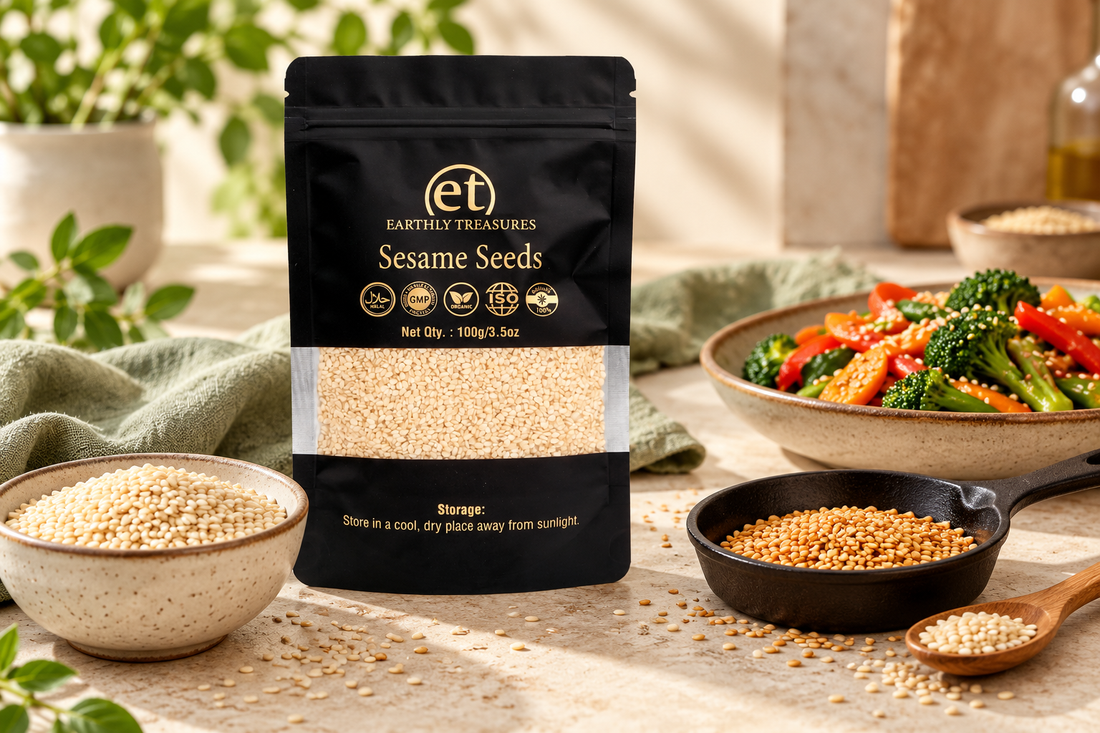
The current Earthly Treasures Sesame Seeds listing describes 100% sesame seeds. That gives you control over what else goes into your cooking. A prepared roasted mix contains additional ingredients and will not behave like pure sesame in a paste. Our raw versus roasted seeds comparison explains the shopping distinction.
Sesame is an allergen. Read the full packet and cross-contact information before serving it to someone with allergies. A smooth paste or a small sprinkle still contains sesame; changing its texture does not remove the allergen.
Keeping the topping useful
Toast only what you plan to use, keep utensils dry and retain the original packet details. Follow the manufacturer’s storage guidance for remaining dry seeds. The seed storage guide covers clean containers and labels. Wet chutneys and dressings need storage appropriate to their added ingredients, rather than the dry seed packet alone.
Frequently asked questions
Is til another name for sesame?
Yes, til is a familiar name for sesame seeds in Pakistani cooking. Still check the ingredient identity on the packet.
Can I use sesame without toasting?
The current product directions allow sprinkling over food as well as light toasting. Follow your specific packet and recipe.
Can a seed mix replace sesame in tahini?
It would make a different paste with different ingredients. Use sesame for a sesame tahini recipe.
Compare Sesame Seeds or use the seed buying guide to choose the format for your next meal.